 Nurseries Road, Wheathampstead, Herts, AL4 8TP


Curriculum
Our curriculum aims to ignite the imagination and stretch the minds of our pupils, with a strong focus on foundational learning.
Our curriculum covers the statutory requirements of the National Curriculum that we have enhanced with a keen focus on the needs of our cohort and community. We have ensured that this produces a well-balanced and engaging curriculum that focused on aquiring the key foundational skills and both inspires and engages.
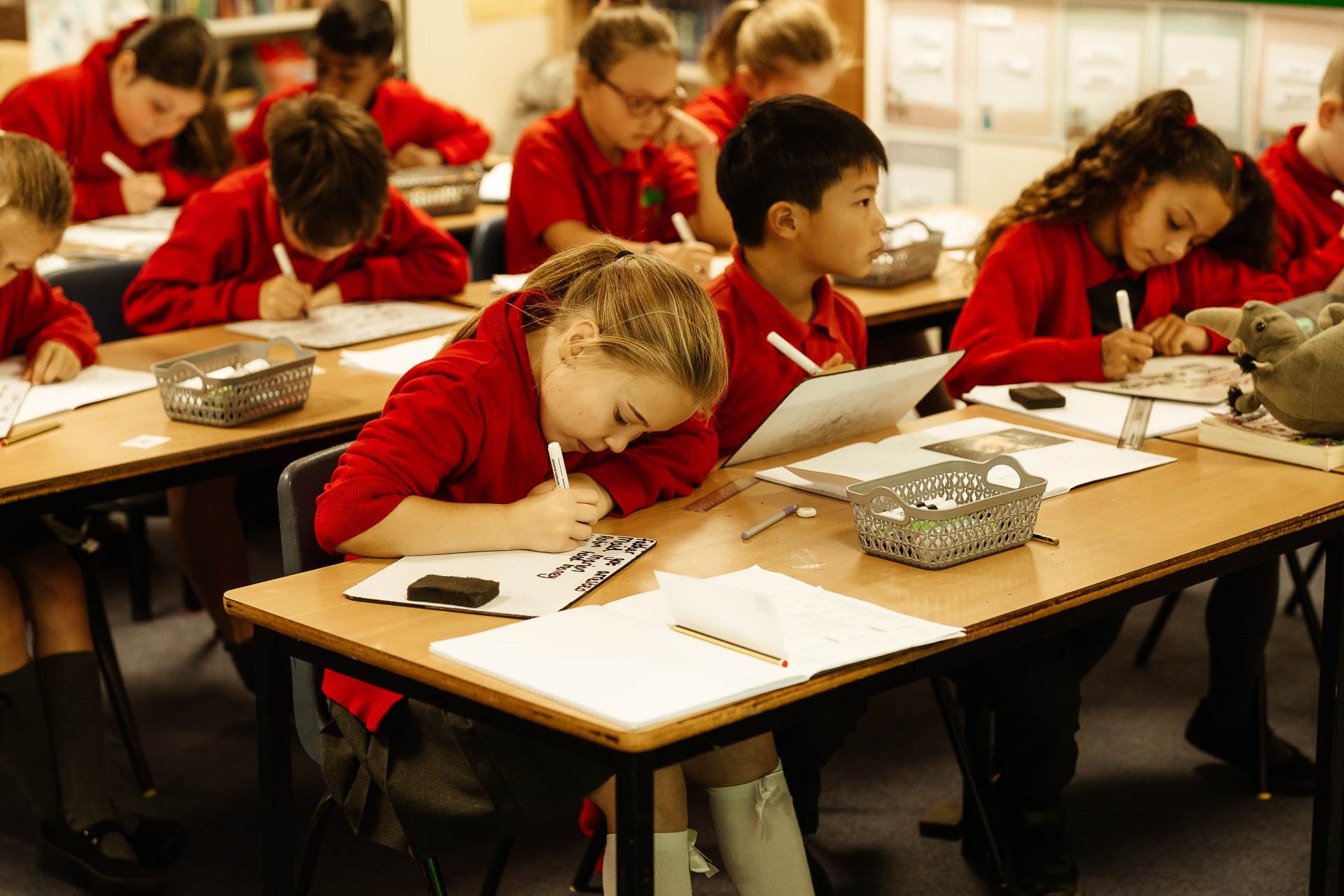
Below you will find each subject’s knowledge, skills and content alongside an overview of each year group from the Early Years Foundation Stage (EYFS) to the end of Year 6. These demonstrate progression, coherence and sequencing, ensuring preparedness for every pupil for their next stage of education.
The Aim of Our Curriculum
At Beech Hyde our vision is to build confidence in all our pupils to dream big and achieve more than they could ever imagine.
Intent
- Our ambitious curriculum has been constructed and designed to give all pupils the foundational knowledge and cultural capital they need to succeed in life. We aim to develop all our children's knowledge, skills and abilities so that they can apply what they know and can do with increasing fluency and independence.
- The curriculum includes statutory elements from the national curriculum and adaptations for our children at Beech Hyde.
- Our curriculum is planned and sequenced by building on prior learning and developing skills for future learning, ensuring that the children are ready for the next stage in their educational journey.
- The curriculum is adapted and developed to meet the needs of pupils with SEND, and those with disadvantage, ensuring it is engaging inspiring and removes any barriers to sucess.
Implementation
- Leaders provide support through regular and well tailored CPD, for teaching the range of subjects in the primary curriculum.
- Teachers enthusiastically present subject matter and promote appropriate discussion about the subjects being taught.
- Our teaching is designed to help pupils to remember long term the content they have been taught and to integrate new knowledge into larger concepts.
- Teachers and leaders use assessment well to check understanding and inform teaching. They check pupils’ understanding systematically, identify misconceptions accurately and provide clear, direct feedback.
- Teachers create an environment that allows the learner to focus on learning, with a strong Behaviour for Learning curriculum imbedded from Early Years.
- Our reading curriculum develops pupils’ fluency, confidence and enjoyment in reading. At all stages, reading attainment is assessed and gaps are addressed for all pupils.
- Teachers ensure that their own speaking, listening, writing and reading of English supports pupils in developing their language and vocabulary well.
Impact
- Pupils develop knowledge and skills across the curriculum so that they are ready for the next stage of education.
An Education for Every Child
We ensure our school values are weaved into every lesson, supporting our pupils to become content and well regulated individuals. The Beech Hyde Curriculum embodies our motto that we are Learning for life in a community where everyone matters. With a significant focus on our Beech Hyde Code comes a strong sense of inclusion and community.
We are committed to the development of every individual: our entire teaching team work hard to provide stretch and challenge for all our children, no matter their starting point. We continue to invest in our highly skilled teaching staff through targeted CPD to ensure we are able to support our pupils in an informed way.
Our children are happy because they know we are committed to their learning and ensuring they reach their potential.
We foster a positive school environment rooted in respect. In our classrooms, there is a focus on friendship, honesty, kindness and caring about each other. We celebrate effort and ‘having a go’, and we embrace making mistakes in order to build resilience and self-belief.
We want to ensure that our children develop expertise and confidence for the rest of their education and beyond.
Beyond the Classroom
Rich learning experiences include opportunities for pupils to revisit and deepen their knowledge and to practise skills, helping them to become embedded in long-term memory. Learning takes place both indoors and outdoors and is enhanced, where possible, by the use of a visiting workshops or off-site visits.
As well as a commitment to consistency and high expectations on the academic side of school life, we also encourage our children and staff to embrace and explore their individuality. We offer a rich variety of after-school clubs, including music, sport and languages.
We also believe in a commitment to forging strong links with our wider community. We provide regular opportunities for parents and other members of our local community to be involved in the life of the school: these enrich the learning experiences within and beyond the school day. Making these links also enables our children to develop empathy and to make sense of their place in the world, in both the local and wider contexts.
Foundational Learning
English - Reading
We strive both to equip our children with the skills and knowledge to read and to instil a love of reading in all our children from the very start. We believe that reading opens the door to the rest of the curriculum and that exploring a range of texts and genres helps children broaden their vocabulary and understanding of the world.
In the EYFS and KS1 we follow Little Wandle Letters and Sounds to teach phonics and early reading. Children will follow the Little Wandle reading scheme and be provided with reading books at each stage until they become a free reader.
They become increasingly confident in using their phonic knowledge to recognise and sound out known and unknown words and begin to read with some fluency and expression, both on a one-to-one basis, in a small group and as a class. As they become more confident readers, children are given opportunities to answer a range of questions, using evidence from the text. Their reading journey exposes them to new and subject-specific vocabulary and opportunities to read in all curriculum areas. Ultimately, we aim to enable the children to independently and critically explore a wider range of texts and authors for pleasure.
At Beech Hyde we encourage a love of reading at an early age. We have a fully stocked library that children can visit once a week (and at other times) to browse and borrow books.
English – oracy
We believe that strong oral communication is vital as a skill in its own right. Additionally, it is a means to acquiring and developing language and enhances learning and progress across the whole curriculum. As an important part of the English curriculum, it aids the development of vocabulary, grammar and language structure which, as they develop in speaking, then feed into children’s writing.
Children are taught to speak audibly and confidently, with increasing fluency and engagement, in a range of situations and curriculum subjects and in a variety of contexts, from one-to-one conversation, to paired and group discussion, and planning presentations to whole classes or even bigger groups. Through exploring the skills and language required in each context, children learn to articulate their opinions and feelings, and to listen and respond appropriately to others, valuing their contributions and views, even when these may not align with their own.
English – Writing
Writing is an essential life skill. We want our children to think of themselves as writers and to be able to express themselves in written form accurately and succinctly in all subjects as this is a lifelong skill.
The teaching of writing follows the three-phase teaching sequence model. A high-quality text is used as the driver for each unit and the final written outcome will be anchored to this text in some way. Opportunities to develop and embed the children’s vocabulary, spelling, punctuation, and grammatical awareness and understanding are provided throughout each phase of the sequence, with specific elements being prioritised within each distinct phase. Writing opportunities cover a broad range of text types (as set out in the long-term plans) and children can express their creativity and imaginative ideas through the planning, drafting and editing process.
Mathematics (Herts Essentials)
Number sense is at the heart of all mathematics lessons and staff continually seek opportunities to sustain and develop this in our pupils. Maths lessons follow a concrete, pictorial, abstract (CPA) approach to embed and build on core skills. Children move fluently between the three CPA elements, demonstrating a range of approaches to calculation and problem-solving across the full range of the maths curriculum. Learning is regularly revisited and reactivated through fluency sessions (outside the timetabled maths lesson). Consistent use of key vocabulary and visual representations (such as regrouping and bar models) are built on through the school and across the curriculum. Interventions from teachers and additional adults are used to pre-teach new learning or close gaps in recent learning.
Science (Plymouth Science)
The science curriculum is designed to inspire a thirst for scientific knowledge and enquiry. It is sequenced so that children develop the necessary substantive (conceptual) and disciplinary (exploratory and investigative) knowledge to plan and carry out practical work whilst developing an increasing body of knowledge that they can apply beyond the classroom.
Practical lessons clearly relate to curriculum content and include explicit teaching of the skills required to work scientifically. They provide opportunities for the children to formulate, research and answer questions, consider variables and fair testing, predict, hypothesise, observe, analyse and present data and develop explanations and conclusions from evidence.
Key concepts and skills are revisited to aid retrieval and embed understanding. External trips, visits from scientists and links with outside organisations build the children’s science capital and enhance both their appreciation of the world of science and the value of scientific enquiry.
Art and Design
Art lessons provide the opportunity for pupils to share and express their individual creativity, independence and self-reflection. We aim to provide children with the fundamental skills, techniques and knowledge needed to independently create their own, unique artwork using a range of media and to engender a sense of wonder and curiosity when studying a wide range of artwork. This, in turn, empowers and inspires the children to explore their own potential and allows them be creative without the need for perfection! Experiencing the enjoyment and satisfaction of the process of producing art is just as important as the end product.
Computing (Switched On)
Computing skills are developed through a wide variety of subjects in order to enable our pupils to become digitally confident and literate. They develop a strong awareness of digital safety at and in an ageappropriate level and manner, and are reminded of this whenever they use a digital device. Through discrete computing lessons, pupils are taught about coding, computer networks, systems and the internet, as well as the use of software tools and digital media.
These sessions provide opportunities for children to explore different aspects of each skill and to allow time for the children to ask questions about how computers work and to learn how to find out the answers to their questions for themselves. Children have opportunities to use a variety of devices and applications and to explore how they can use technology to enhance and communicate their learning.
Design and Technology
Design and Technology is taught in a practical manner inspiring the children to use creativity and imagination to design and make products. Children are taught to solve real problems across a variety of contexts and drawing on other areas of the curriculum, such as maths, computing, science and art.
Teaching includes elements of evaluating past and present designs to help develop an understanding of their impact on daily life and the wider world. Pupils follow a clear design process: with planning, make and evaluating phases. Children are encouraged to explore and to learn through making mistakes and solving problems. They are encouraged to question their methods and encouraged to be creative, innovative and resourceful in their solutions.
Geography
Geography topics aim to inspire children’s curiosity and fascination about the world, with geographical skills taught in combination with subject knowledge. There is a strong focus on the use of geographical vocabulary and geographical skills are taught through in-school learning and fieldwork. These include using maps and compasses, fieldwork, collecting, analysing, interpreting and communicating a range of data from geographical sources in a variety of different ways.
The three core areas of study throughout the school are locational knowledge, place knowledge and human and physical geography.
History
History topics begin with a lesson to sequence the chronology of the period, relating it to other periods already studied to build an understanding of Britain’s past and that of the wider world. Within each history lesson pupils will work towards answering an enquiry question, aiding understanding of causation, consequence, change and continuity.
Children are given the opportunity to ask questions, evaluate and interpret sources and artefacts and make comparisons and links with prior learning. External trips and History Days will bring history to life and provide children with an immersive experience.
French (Language Angels)
Pupils study French in Key Stage 2. Over the course of each unit of work, pupils experience practical activities with a focus on speaking and listening, enabling pupils to understand and communicate simple ideas. Teachers introduce vocabulary and grammar whilst building on prior knowledge to develop children’s confidence. Lessons build up from oral work to short reading and writing tasks.
Pupils are given context to the language through an appreciation of the culture in French speaking countries and enrichment opportunities such as visits from native speakers, cultural events and celebrations.
Music (Charanga)
Music making is a collaborative endeavour which builds community, develops creativity, and inspires and moves both the performer and the listener. The music curriculum provides pupils with opportunities to sing, listen, perform, compose and evaluate. Through making and exploring music, pupils develop both musical knowledge and musicianship, following a carefully sequenced progression of skills and knowledge which builds on prior learning.
This is delivered through curriculum music lessons, where the theory of music is taught and applied to the performance, composition and analysis of music they make and listen to. In addition to class-based lessons, pupils’ musical learning is further developed through weekly music assemblies, preparation for concerts and productions (within and beyond the school) and opportunities to experience live music. This is enhanced by extra-curricular musical activities, such as instrumental tuition, choirs and ensembles.
Physical Education (Complete PE)
The PE curriculum aims to give children the tools and understanding required to make a positive impact on their own physical health and well-being. Children are taught to observe and follow the conventions of fair play, honest competition and good sporting behaviour as individual participants, team members and spectators, embedding life-long values such as cooperation, collaboration and equity of play. It will teach children to cope with both success and failure in competitive, individual and team based physical activities.
Lessons should be taught in a sequence, allowing children to learn the fundamental skills and rules of the different sports, gymnastics and dance, building on prior learning and applying them to games, matches and performances. Children should be active throughout their PE lessons, with time allocated for discussing skills, rules and tactics as well as reviewing and evaluating their performance.
Personal Social Health Education (PSHE) (Jigsaw)
PSHE provides a foundation on which to build academic learning. It aims to promote the spiritual, moral, cultural, mental and physical development of pupils and to prepare them to participate fully in and make the most of the opportunities, responsibilities and experiences of later life. Children are given the time and space to explore, clarify and, where appropriate, challenge their own and others' values, attitudes and beliefs and to develop an understanding of our rights and responsibilities.
Our PSHE work includes a strong focus on our school values and on mental health and wellbeing. In addition to weekly taught sessions, which follow a familiar structure, using the Jigsaw scheme, opportunities for PSHE learning are developed across all areas of the curriculum and through occasional special events. Children develop subject knowledge within each focused Jigsaw unit, which builds towards a final outcome that demonstrates how this translates into personal understanding and can be applied to us as a school community and to each child’s individual context.
Religious Education (Jigsaw)
RE provides an opportunity for pupils to develop religious and theological literacy through exploring Christianity and other principal religions and worldviews and understanding how they provide a source of wisdom for and impact on the daily lives individuals and communities.
It contributes to their spiritual, moral, social and cultural development and promotes an understanding of diversity, enabling them to participate fully in and make the most of the opportunities, responsibilities and experiences of current and future life in contemporary Britain. Pupils explore ultimate questions and how these are answered by religions and worldviews. They are encouraged to develop their own personal reflections, critical responses and connections to faith and belief, and to develop and ask their own questions of meaning and purpose which also provides a framework for making sense of unforeseen events of a religious, moral or philosophical nature, whether local, national or global.
If you require any further information about our curriculum, please contact your child's class teacher or Headteacher, Ms K Thomas.
Statement about the use of AI
Our staff may use AI generation tools (i.e. to help create teaching resources or to assist with administration tasks), however any information produced would be vetted before use.
Foundational Learning at Beech HydeEYFS CurriculumWriting Curriculum Y1-6Reading Curriculum Y1-6
Curriculum Overview by Year Group - N - 6
Curriculum Overview by Subject
Skills Progression - Science and Foundation Subjects
Nursery Curriculum Map Autumn 2026
Reception Curriculum Map Autumn 2026
Year 1 Curriculum Map Autumn 2026
Year 2 Curriculum Map Autumn 2026
Year 3 Curriculum Map Autumn 2026
Year 4 Curriculum Map Autumn 2026